










In the high-stakes world of cryptocurrency, security has become a defining challenge. For enthusiasts and investors alike, 2025 has marked a significant year in the ongoing battle against exchange hacks. These hacks have not only caused massive financial losses but also intensified the demand for tighter, more reliable security protocols in the industry. As the digital landscape grows, the value and vulnerability of crypto assets rise, compelling exchanges to invest heavily in cutting-edge security measures to prevent a single vulnerability from leading to substantial losses.
Key Takeaways
- 1In 2025, crypto hacks caused losses of $2.7 billion, reflecting a continued rise in attacks.
- 2Despite Bitcoin’s value stabilizing above $105,000, centralized platforms remained vulnerable due to compromised private keys.
- 3By mid-2025, only $41 million of the 2022 Nomad Bridge hack funds had been successfully recovered.
- 4In 2025, North Korean hackers stole an estimated $1.5 billion in crypto, accounting for over 60% of global crypto thefts.
- 5In January 2025, Moby on Arbitrum lost $2.5 million via a leaked key, involving USDC, WETH, and WBTC assets.
Surge in Monthly Dapp Market Activity
- The decentralized app (dapp) market showed significant volatility in monthly transaction volumes over the past seven months.
- In August 2024, activity was relatively low at $69M.
- A noticeable uptick occurred in September 2024, with transactions reaching $114M, followed by a slight dip to $94M in October.
- The market experienced a sharp drop in November and December, plummeting to $18M and $11M, respectively — the lowest points in this period.
- A small recovery emerged in January 2025, with activity rising to $62M.
- The most remarkable surge happened in February 2025, with transaction volume skyrocketing to $1.7Bn — marking a massive spike and the highest value recorded in the chart.
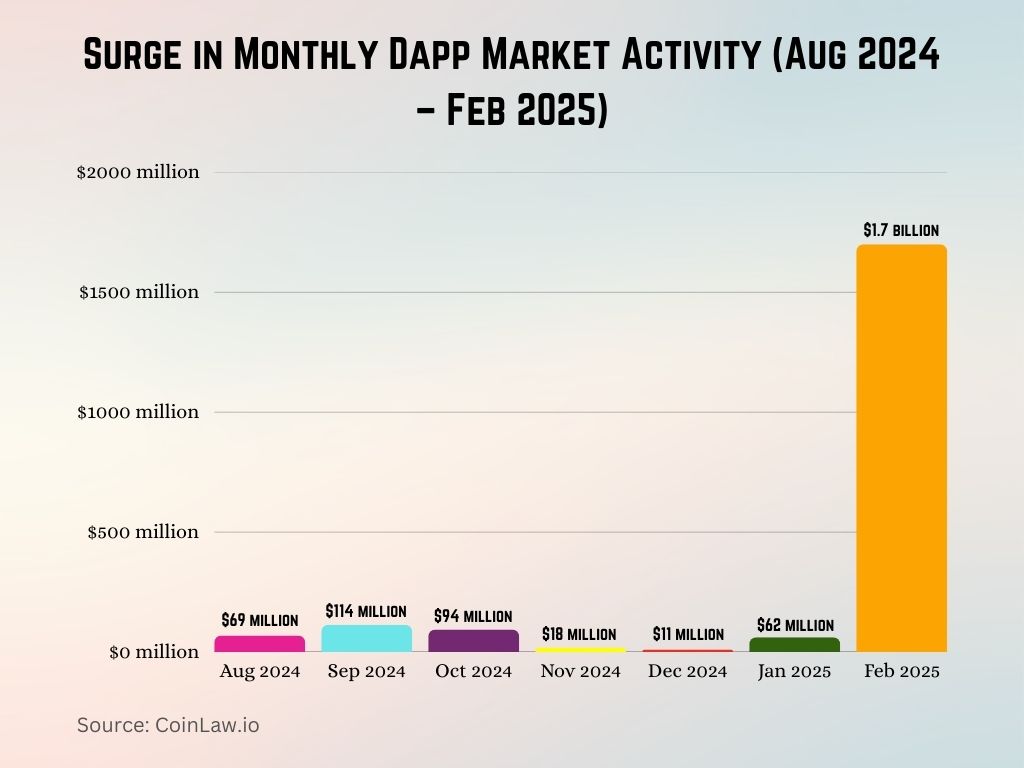
This dramatic rise suggests renewed interest or a major event driving volume in the dapp ecosystem in early 2025.
Overview of Crypto Exchange Hacks
- In H1 2025, crypto hacks caused losses exceeding $1.6 billion, continuing the steep upward trend from past years.
- Centralized exchanges remained the top targets, accounting for 71% of all reported crypto platform breaches.
- DeFi platforms experienced a 42% increase in attacks, driven by persistent smart contract vulnerabilities.
- Phishing attacks were responsible for 48% of exchange breaches, showing ongoing reliance on social engineering tactics.
- Malware-based intrusions climbed by 26%, mainly affecting smaller exchanges with weaker infrastructure defenses.
- SIM-swapping accounted for 19% of major hacks, exposing flaws in SMS-based authentication practices.
- A 2025 global survey showed 63% of exchanges raised cybersecurity budgets, yet 31% still reported at least one successful breach.
High-Profile Crypto Exchange Hacks
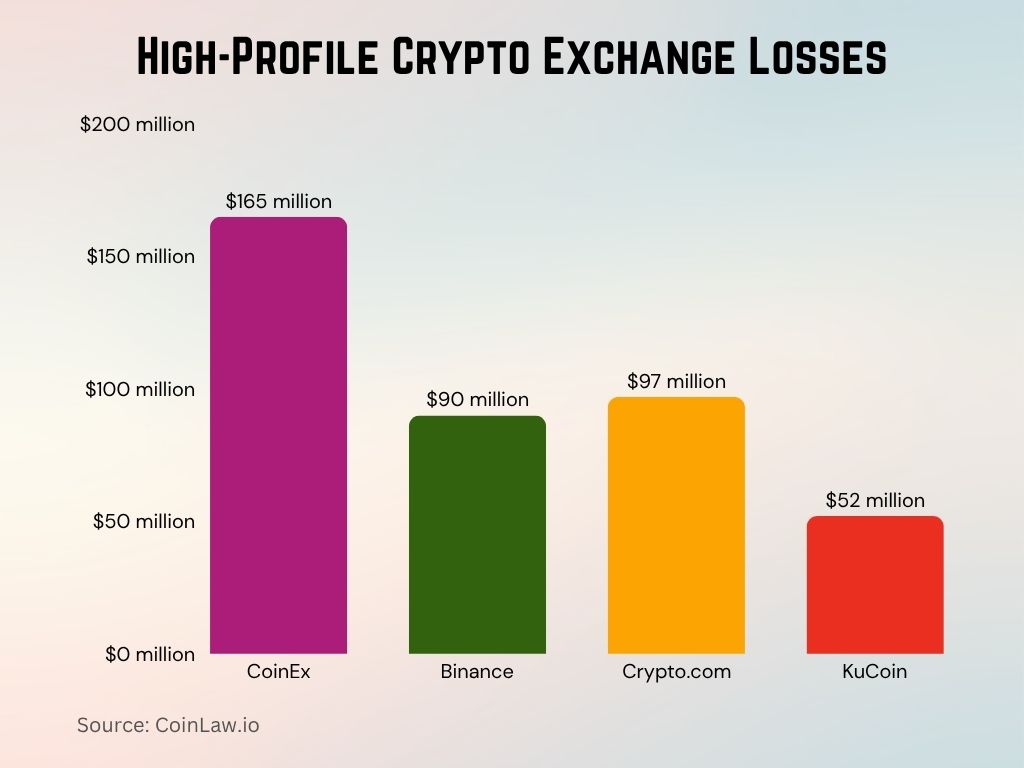
- In February 2025, CoinEx suffered a $165 million loss from a zero-day exploit that bypassed multi-layer authentication.
- Binance was hit in March 2025, with a $90 million breach that triggered temporary withdrawal suspensions on key tokens.
- In April 2025, Crypto.com lost $97 million in an insider-led attack involving collusion between staff and external hackers.
- KuCoin faced a DNS hijack that intercepted login credentials and led to losses totaling $52 million.
- A European DeFi exchange lost $26 million in a weekend social engineering attack targeting hot wallets.
- In July 2025, a Coinbase breach exposed sensitive data of over 250,000 users, sparking fresh debates on user data protection.
- Gemini endured a massive DDoS attack in May 2025, causing hours-long outages but no confirmed financial losses.

History of Cryptocurrency Exchange Hacks
- In 2011, Mt. Gox lost $8.75 million, marking one of the earliest major exchange breaches in crypto history.
- The 2014 Mt. Gox attack remains the largest, with 850,000 BTC stolen, valued at $450 million then and worth billions today.
- In 2016, Bitfinex was hacked for $72 million, prompting widespread upgrades to multi-signature wallet security.
- The 2018 Coincheck hack led to the theft of $530 million in NEM, triggering tighter regulations across Asian crypto markets.
- Binance lost $40 million in 2019 from phishing and API loopholes, driving industry-wide security audits.
- KuCoin was hit in 2020, with $280 million stolen, most of which was recovered using blockchain forensics.
- In 2021, the Poly Network hack saw $610 million lost, later mostly returned after talks with the white hat hacker.
- The Ronin Network bridge breach in 2022 resulted in $620 million stolen, exposing major risks in cross-chain protocols.
- In 2023, AI-based hacks increased, driving a 20% rise in losses from automated exploit systems.
- 2024 saw more complex attacks targeting both centralized and DeFi platforms, with hackers using layered attack strategies.
- In 2025, hybrid attacks combining AI, phishing, and bridge exploits led to over $2.7 billion in exchange-related losses globally.
Rapid Growth Projected in Cryptocurrency Exchange Platform Market
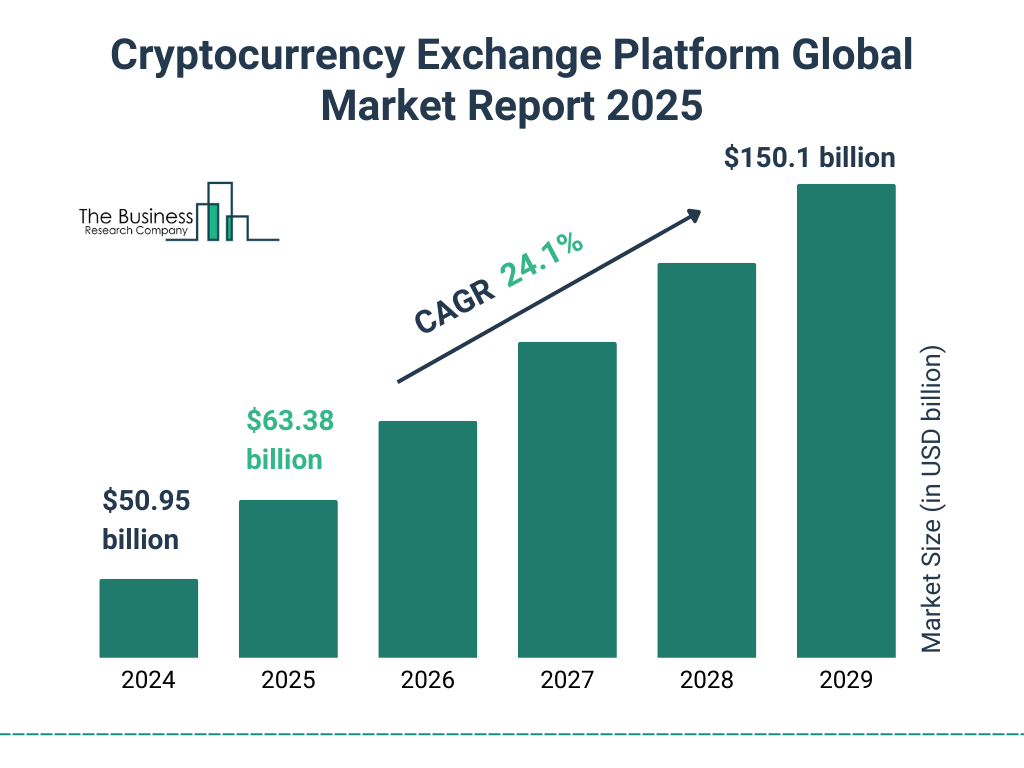
- The global cryptocurrency exchange platform market is expected to grow from $50.95 billion in 2024 to $150.1 billion by 2029.
- This represents a Compound Annual Growth Rate (CAGR) of 24.1% over the forecast period.
- By 2025, the market size is projected to reach $63.38 billion, indicating strong early momentum.
- The sharp growth trend reflects increasing global adoption of digital assets, crypto trading platforms, and blockchain infrastructure.
- This market is on track to triple in size within just five years, signaling major investment opportunities and technological innovation in the crypto ecosystem.
Types of Cryptocurrency Hacks
- Social engineering attacks now account for 33% of exchange breaches in 2025, targeting human error over technical flaws.
- Phishing scams continue to dominate, with fake exchange sites and emails stealing credentials and private keys.
- Malware and spyware infections rose in 2025, especially targeting users on platforms lacking robust two-factor authentication.
- Hot wallet breaches made up about 62% of stolen crypto funds in 2025, underscoring the risks of always-online storage.
- Smart contract exploits in DeFi led to growing losses in user and protocol assets, fueled by unchecked vulnerabilities.
- Zero-day exploits were used in 19% of major 2025 attacks, taking advantage of flaws unknown to developers or security teams.
- DNS hijacking continued in 2025, redirecting user traffic and compromising login data and platform funds.
Hacks of Centralized Exchanges
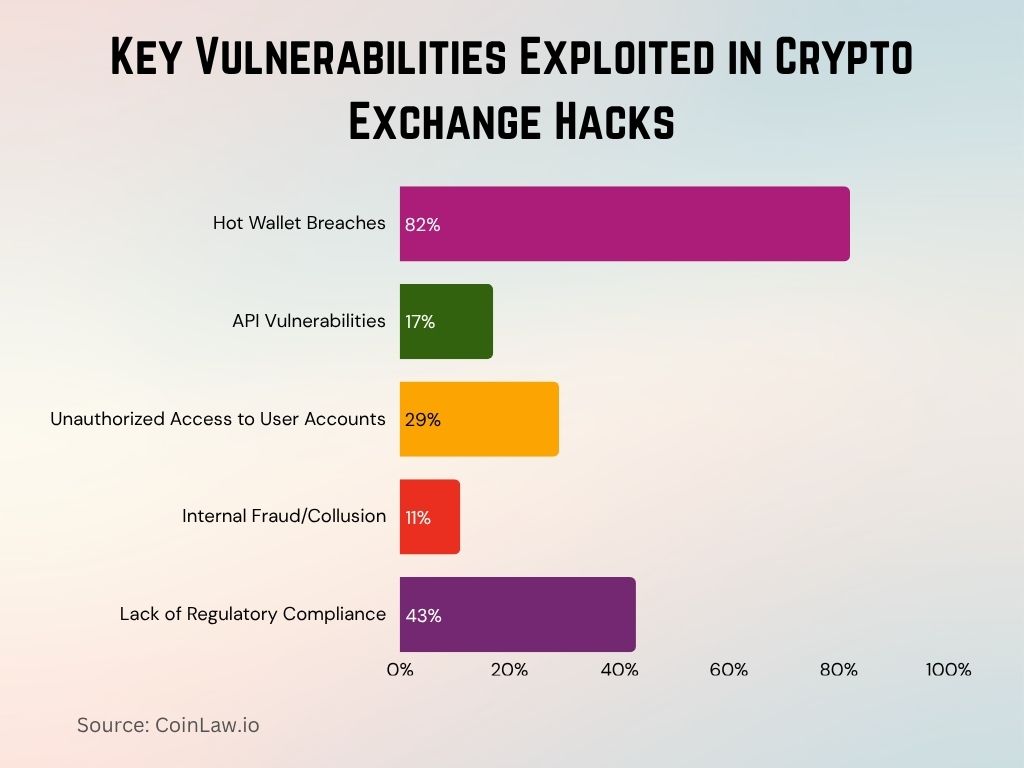
- Hot wallet breaches remain the leading threat, causing 82% of all CEX-related losses over the past five years.
- In 2025, API vulnerabilities accounted for 17% of CEX hacks, exposing transaction flows and user metadata.
- Unauthorized account access was involved in 29% of CEX breaches, often due to weak password practices and a lack of 2FA.
- Internal fraud and employee collusion contributed to 11% of all CEX attacks, reflecting gaps in insider risk controls.
- Unregulated CEXs saw at least one major breach in 43% of cases, revealing the dangers of lax compliance frameworks.
- Server-side attacks like DDoS disrupted CEX availability but rarely led to losses, though they eroded user trust significantly.
- The average detection time for CEX hacks in 2025 is 68 hours, with faster response linked to lower financial damage.
DeFi Hacks and Protocol Vulnerabilities
- Smart contract flaws caused 67% of DeFi losses in 2025, mostly due to unchecked code and poor audit coverage.
- Cross-chain bridge exploits resulted in over $520 million in stolen funds, targeting weak points in interoperability protocols.
- Flash loan attacks surged again in 2025, leading to multi-million dollar losses through token price manipulation schemes.
- Oracle manipulation triggered an estimated $115 million in losses by exploiting inaccurate or delayed off-chain data feeds.
- Reentrancy attacks made up 17% of DeFi breaches in 2025, draining funds via recursive smart contract calls.
- Liquidity pool drains led to $335 million in stolen assets, often caused by vulnerable protocol logic and unaudited contracts.
- Lack of audits remains critical, with 52% of DeFi platforms reporting a security breach within their first operational year.
Wallet Hacks and Social Engineering
Cryptocurrency wallets, particularly hot wallets, are susceptible to hacking, with social engineering becoming a favored method for targeting individual users and exchanges alike.
- SIM-swapping attacks resulted in over $150 million in losses this year, allowing hackers to bypass SMS-based two-factor authentication on user accounts.
- Fake wallet apps have proliferated, often imitating popular wallets like MetaMask to capture user credentials and private keys.
- Cold wallet security remains robust, but some hacks involve physical security breaches, particularly in areas where crypto is heavily used.
- Email spoofing and malicious links used in phishing attacks account for 20% of wallet-targeted hacks, exploiting user trust in familiar brands.

- Browser extensions with vulnerabilities have been targeted, leading to wallet information leaks in 6% of incidents involving browser-based wallets.
- Malware attacks on exchanges that access users’ hot wallets have led to $200 million in losses, emphasizing the risks associated with hot storage.
Common Vulnerabilities in Crypto Exchanges
- Outdated 2FA systems led to a 32% rise in account takeovers in 2025, especially on platforms still relying on SMS-based verification.
- Weak API security caused 27% of centralized exchange breaches, allowing attackers to bypass authentication protocols.
- Unencrypted user data resulted in 17% of crypto data breaches, exposing users to identity theft and fund loss.
- Poor internal access controls enabled unauthorized employee access in 11% of exchange hacks during 2025.
- Lack of smart contract audits caused over $540 million in DeFi losses, largely due to unverified or reused code.
- Third-party service flaws, like misconfigured cloud storage, contributed to 24% of infrastructure-related breaches.
- Insufficient phishing awareness among users led to 43% of phishing incidents ending in direct monetary theft.
Crypto Hacks and Exploits
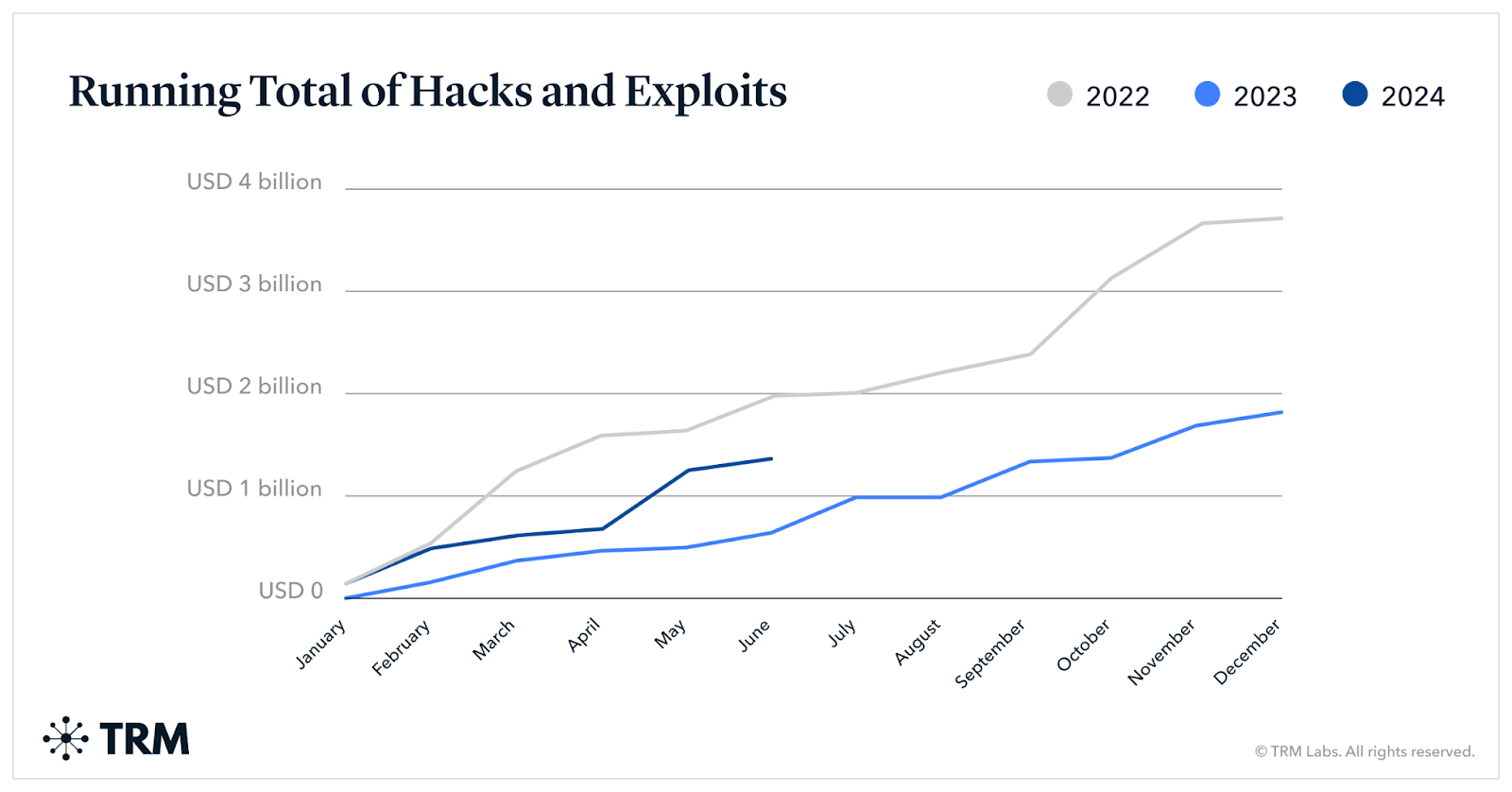
- The total value of crypto hacks and exploits in 2022 peaked at approximately $3.8 billion, making it the worst year among the three.
- In 2023, the figure dropped significantly, ending the year at around $1.8 billion, indicating heightened security measures or reduced attack surface.
- For 2024, as of June, the total has reached roughly $1.3 billion, already outpacing 2023’s mid-year mark.
- The first half of 2024 saw a notable spike in May, with over $1.2 billion in cumulative losses.
- Despite the early acceleration in 2024, the trajectory remains below the extreme levels of 2022, suggesting improved industry resilience.
Smart Contract and Exchange Code Vulnerabilities
- Unverified smart contracts caused over $630 million in DeFi losses in 2025, driven by unchecked bugs and copy-pasted code.
- Lack of automated testing led to 16% of DeFi platforms launching with critical vulnerabilities undetected pre-deployment.
- Upgradability flaws enabled unauthorized changes and resulted in $270 million in damages, especially on projects lacking multi-signature governance.
- Oracle manipulation accounted for 13% of DeFi exploits, with attackers altering external data feeds to trigger faulty contract responses.
- Reentrancy bugs were responsible for $325 million in stolen assets, particularly from older or forked contracts.
- Infrequent audits left 52% of DeFi protocols exposed, as most went over six months without formal code review.
- Cross-chain protocol flaws drove 22% of DeFi-related hacks, with insecure messaging and bridging tools compromising multi-chain assets.
Lost to Exchange Hacks Since: Key Causes Revealed
- Since 2012, over $3.45 billion has been lost across 48+ exchange hacks, according to Binance Research and HedgeWithCrypto.
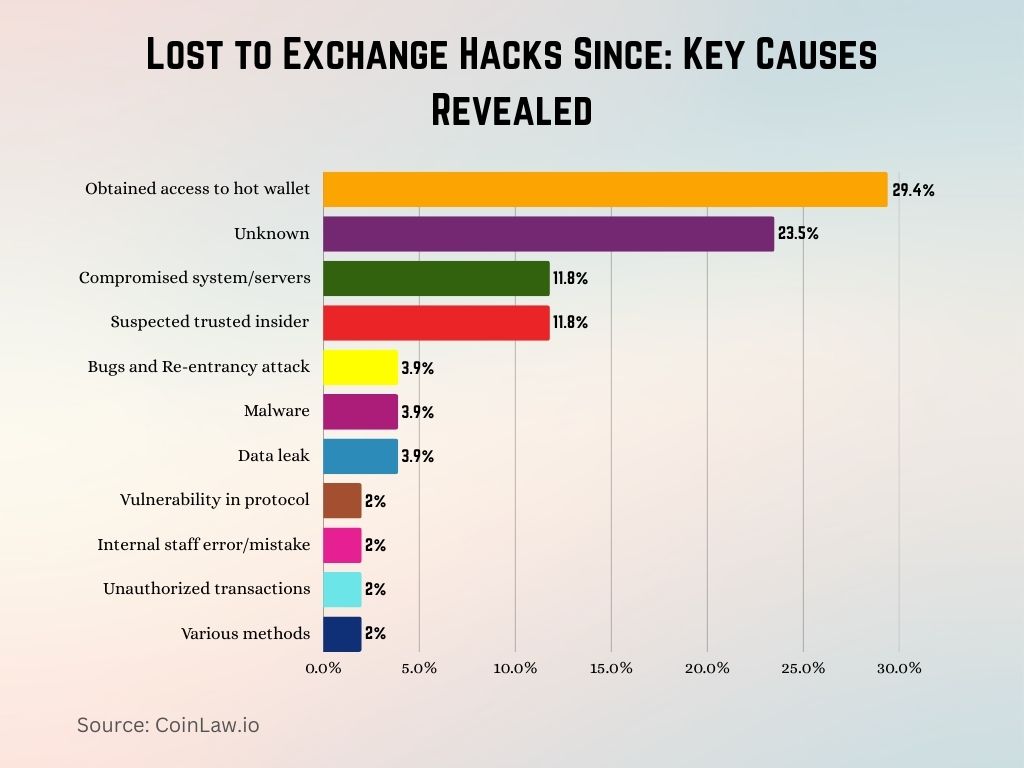
- The leading cause of these breaches was gaining access to hot wallets, accounting for 29.4% of the total losses.
- 23.5% of the incidents had unknown causes, highlighting gaps in post-hack transparency or forensics.
- Compromised systems/servers and insider threats (suspected trusted insiders) each made up 11.8%, pointing to internal and infrastructure vulnerabilities.
- Other notable causes include:
- Bugs, malware, and data leaks – each contributing 3.9%
- Protocol vulnerabilities, internal staff errors, unauthorized transactions, and various methods – each at 2.0%
Governmental Efforts Against Crypto Threats
- The US Treasury rolled out a 2025 compliance rule requiring real-time breach disclosure and tighter surveillance for crypto exchanges.
- The EU’s MiCA regulation now covers DeFi and stablecoins, enforcing security audits and transparency across all 27 member states.
- Japan’s FSA mandates quarterly cybersecurity audits and annual compliance certifications for all licensed domestic exchanges.
- South Korea’s enhanced AML laws led to a 33% decline in crypto-linked fraud, driven by tighter KYC and reporting rules.
- Singapore expanded its white-hat bounty program in 2025, offering higher rewards for finding vulnerabilities before exploitation.
- India’s crypto framework now requires full cybersecurity compliance for licensing, aimed at cutting down on unauthorized access and fraud.
- Canada’s crypto task force in 2025 introduced national exchange security standards, focusing on data protection and breach recovery readiness.
Recent Developments in Exchange Security
- On January 23, 2025, Phemex suffered a breach that led to the theft of approximately $85 million in crypto assets.
- In February 2025, zkLend, a DeFi protocol, was hacked, resulting in around $9.5 million in stolen digital assets.
- In June 2025, Coinswitch filed a case to recover $10.2 million linked to the $230 million cyberattack on WazirX.
- The U.S. CFPB proposed rules in 2025 requiring crypto firms to refund users for losses due to hacks or unauthorized transactions.
- The European Esma called for mandatory third-party cybersecurity audits under MiCA, ahead of full implementation by December 2025.
Conclusion
In 2025, cryptocurrency exchanges continue to confront formidable security challenges. While hackers are developing more sophisticated tactics, the industry is responding with advanced security technologies, regulatory improvements, and collaborative initiatives. From increased government oversight to innovative AI-driven threat detection, the focus on robust, multi-layered security is crucial. As crypto exchange security evolves, users, developers, and regulators must work together to protect this fast-growing digital frontier and instill confidence in the future of digital asset exchanges.
Hover or focus to see the definition of the term.